Nitro to Electric: Reviving a 20-Year-Old RC Car
Posted on March 17, 2026
The Car
Around 2004-2005, my father, my paternal grandfather, and I built together a Citroën Xsara Kit Car RC from a Salvat magazine collection. It was sold in fascicles — each issue came with a magazine and a bag of parts, and you would assemble the car over time. The very first issue even came with a VHS tape showing an overview of the finished car and how to get started.
The car was powered by a Thunder Tiger Pro 15, a single-cylinder two-stroke nitro engine. It was a proper nitro RC car: loud, fast, and required a glow starter, fuel, and tuning to run. Building it with my father and grandfather is one of my fondest memories — three generations working together on the same project.
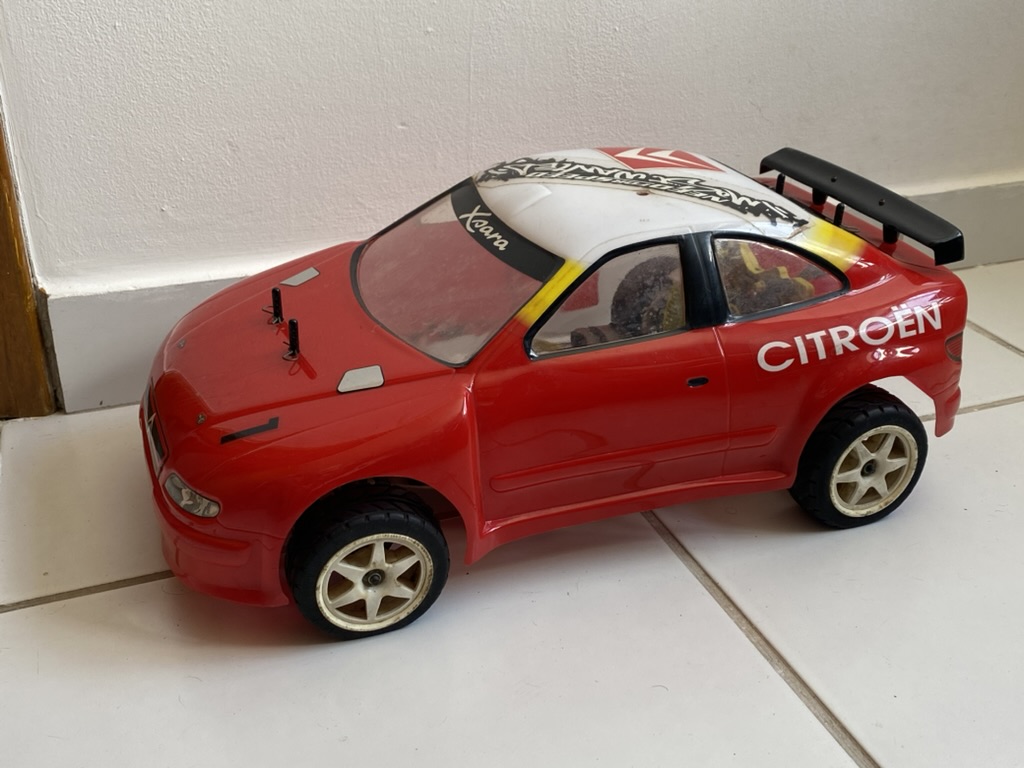
The Citroën Xsara Kit Car — side profile.
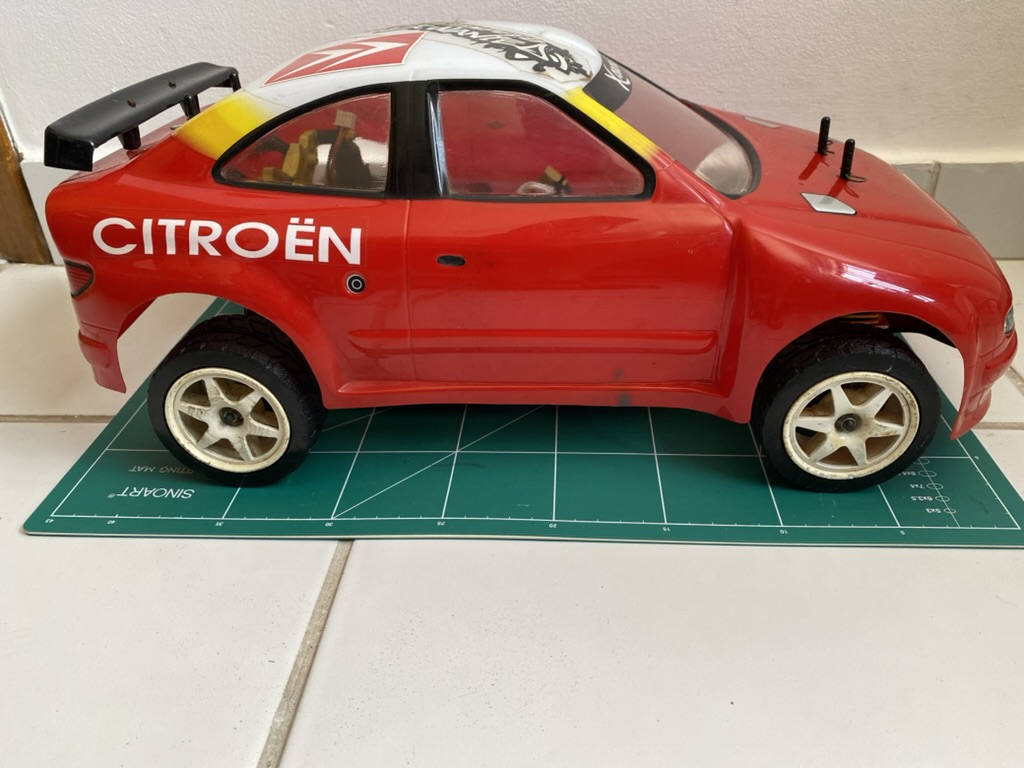
The other side, on a cutting mat for scale.
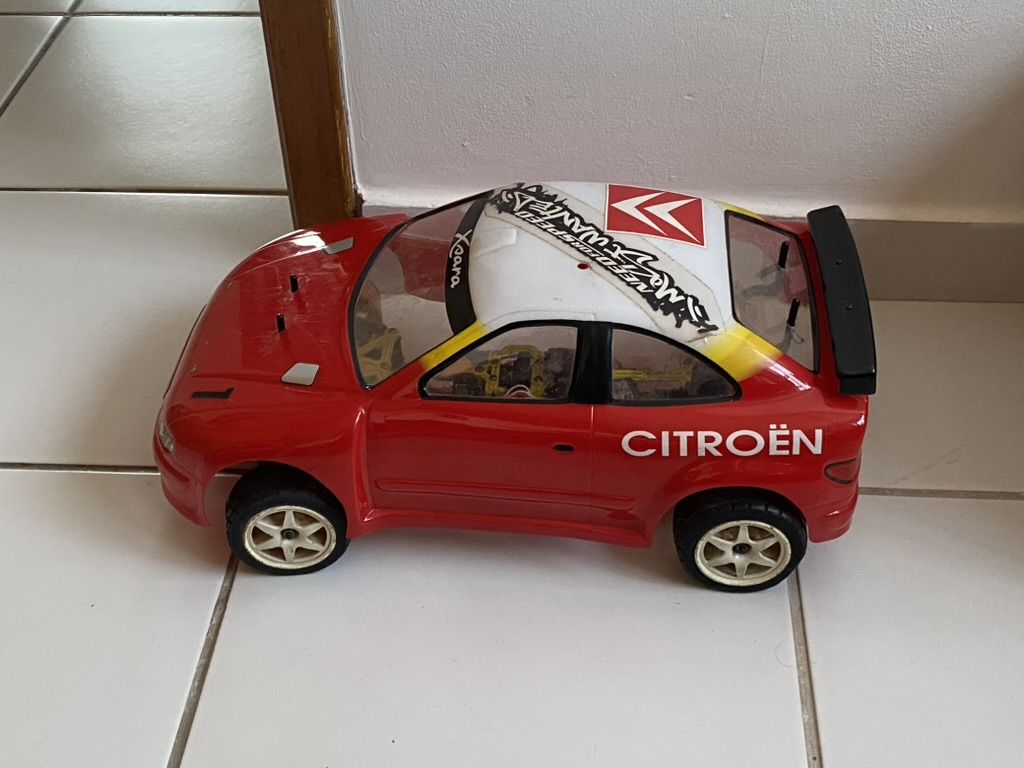
Top-down view of the car with its body shell.
The Problem
After years of sitting unused, the car had accumulated a list of issues. The nitro fuel had gone bad, and since the engine was stored without lubrication, the piston had seized. The air filter foams were lost, the carburetor needed idle calibration, and to top it off, a nitro engine is far too loud to run inside an apartment building.
On top of that, the original rubber tires had degraded over 20 years — the thin rubber had become brittle and was cracking open, almost feeling like plastic rather than rubber.
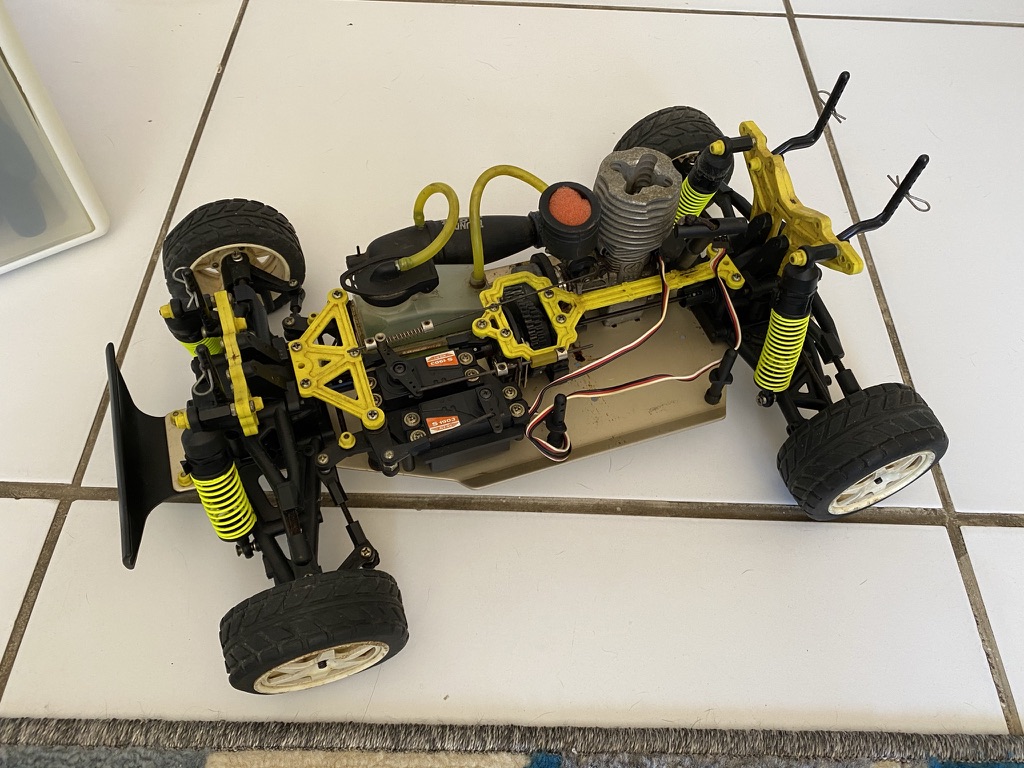
The chassis with the original Thunder Tiger Pro 15 engine still mounted. You can see the orange air filter foam, fuel lines, and exhaust pipe.
The Electric Conversion
Rather than trying to restore the nitro engine, I decided to convert the car to electric. The best part: I already had most of the components from my drone projects. The motor is a 2212 brushless outrunner rated at 800 KV — a spare from my first drone build. The radio is a Turnigy 9X, also from the drone. The battery is a Turnigy 3S 5200 mAh Multistar (10C discharge), repurposed from my second drone. The only new purchase was a 30A ESC.
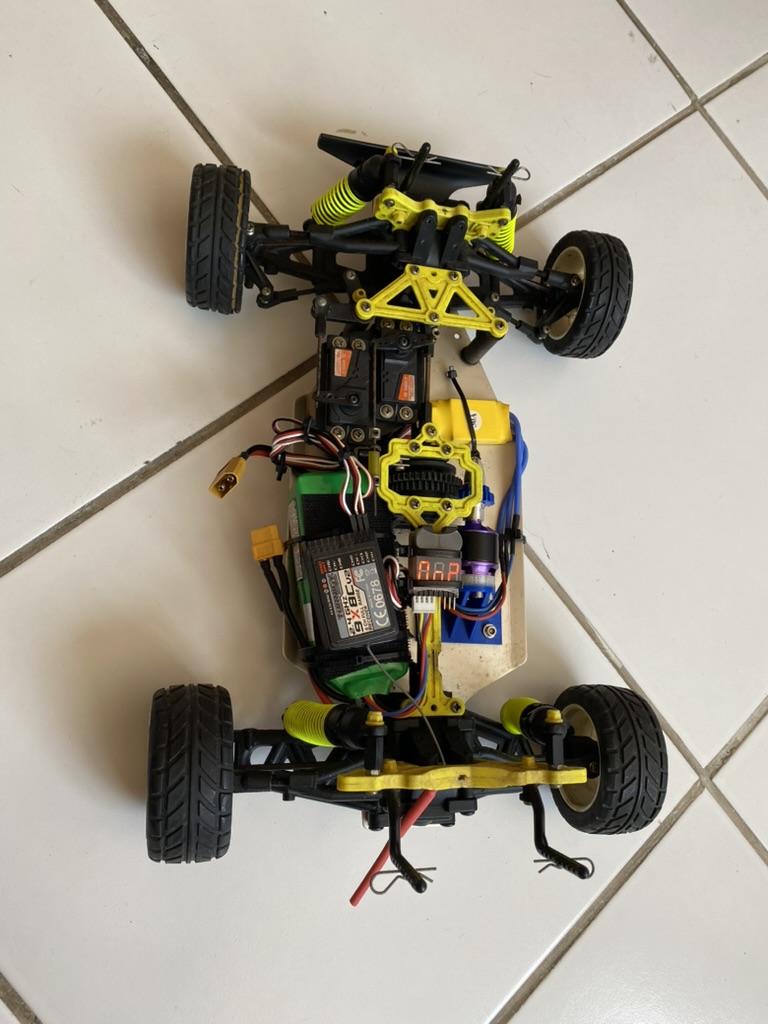
The converted chassis from above — battery, ESC, receiver, and brushless motor all in place, with the original tires still mounted.
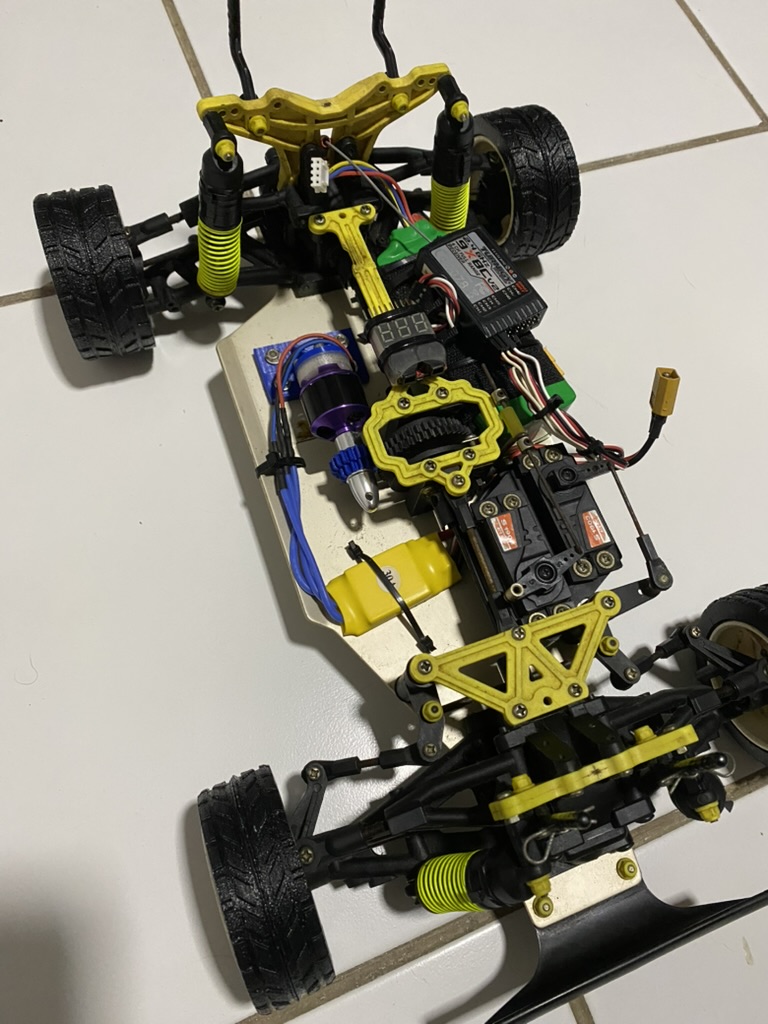
Same setup, now with the 3D-printed TPU tires installed.
3D Printed Parts
The original car was designed around a nitro engine, so fitting a brushless motor required custom adapters. I measured all the original parts with a caliper, modeled replacements in Fusion, and printed them at home with leftover filament.
Motor Adapter and Shim
The brushless motor needed to be mounted at 90 degrees to the chassis — quite different from the original engine orientation. I designed an L-shaped adapter that bolts to the chassis plate and holds the motor in position, plus a shim for fine alignment. Both were printed in PLA.
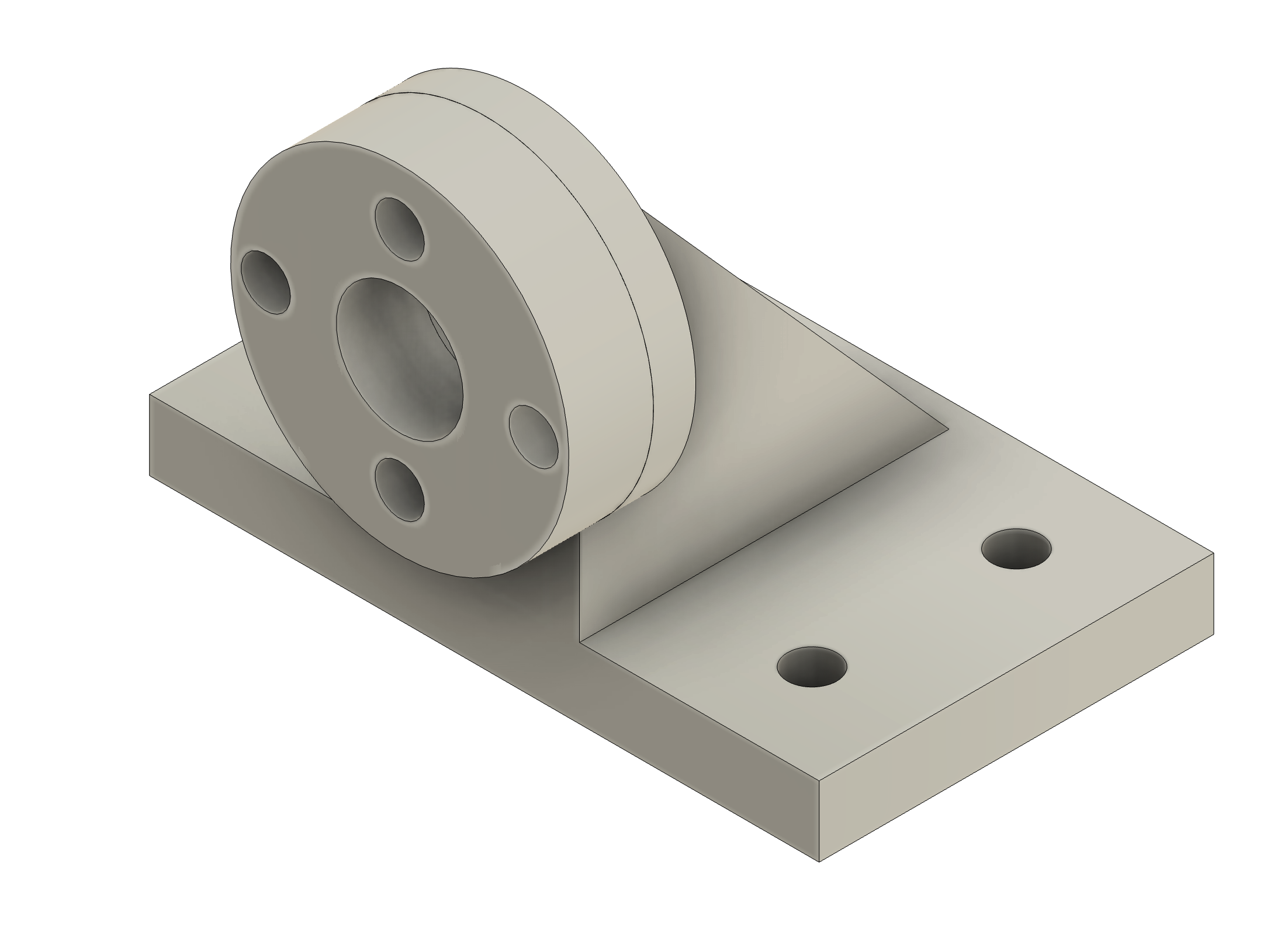
Fusion render of the motor adapter — the base mounts flat on the chassis, and the cylindrical part holds the motor at 90 degrees.
Gearbox Coupling
The original car used a centrifugal clutch to engage the gearbox from the nitro engine. With the electric motor, this clutch was no longer needed. I designed a gear that mounts directly on the motor shaft and meshes with the existing gearbox. Also printed in PLA.
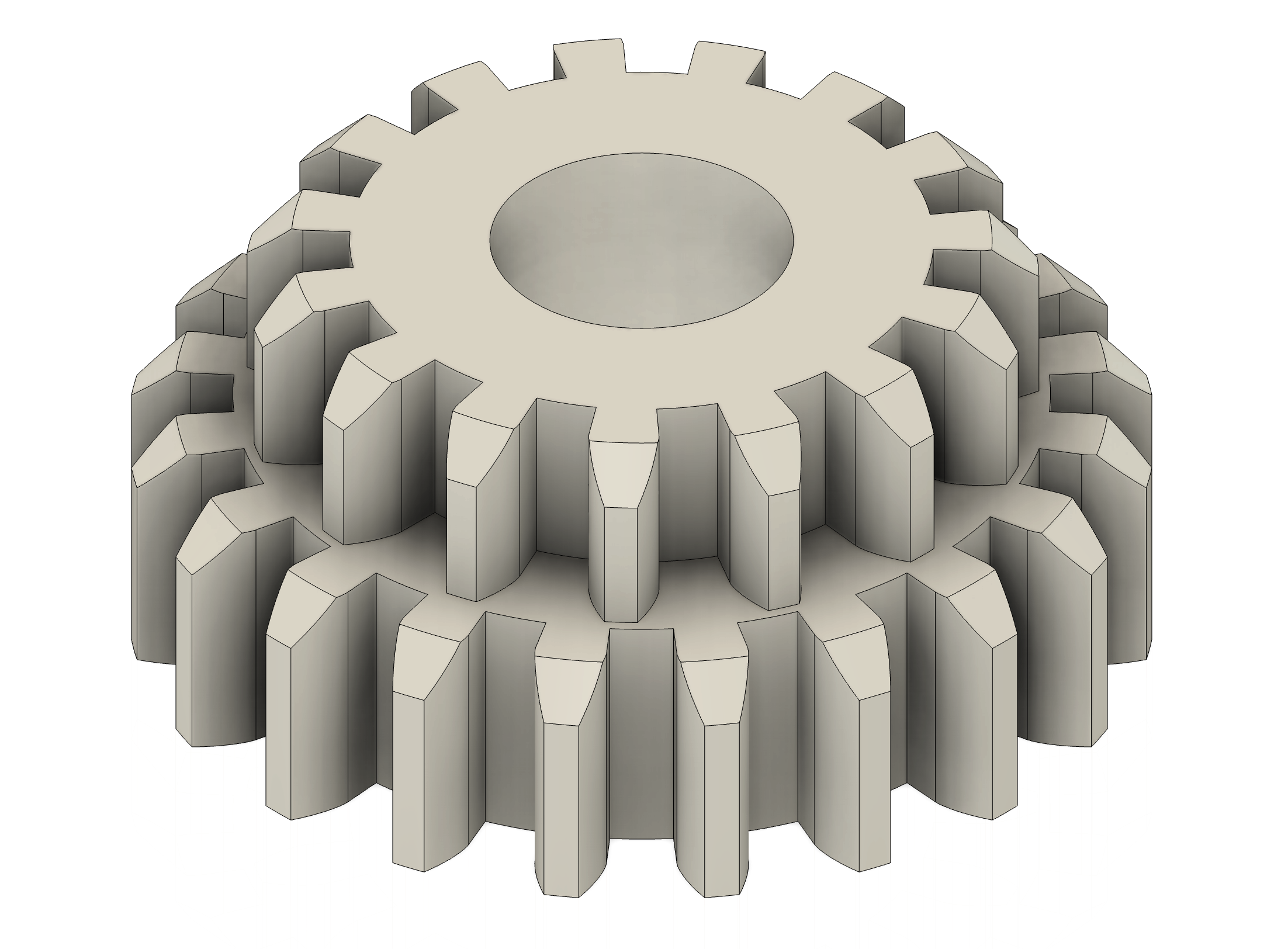
Fusion render of the gearbox coupling — a dual-gear design that replaces the centrifugal clutch.
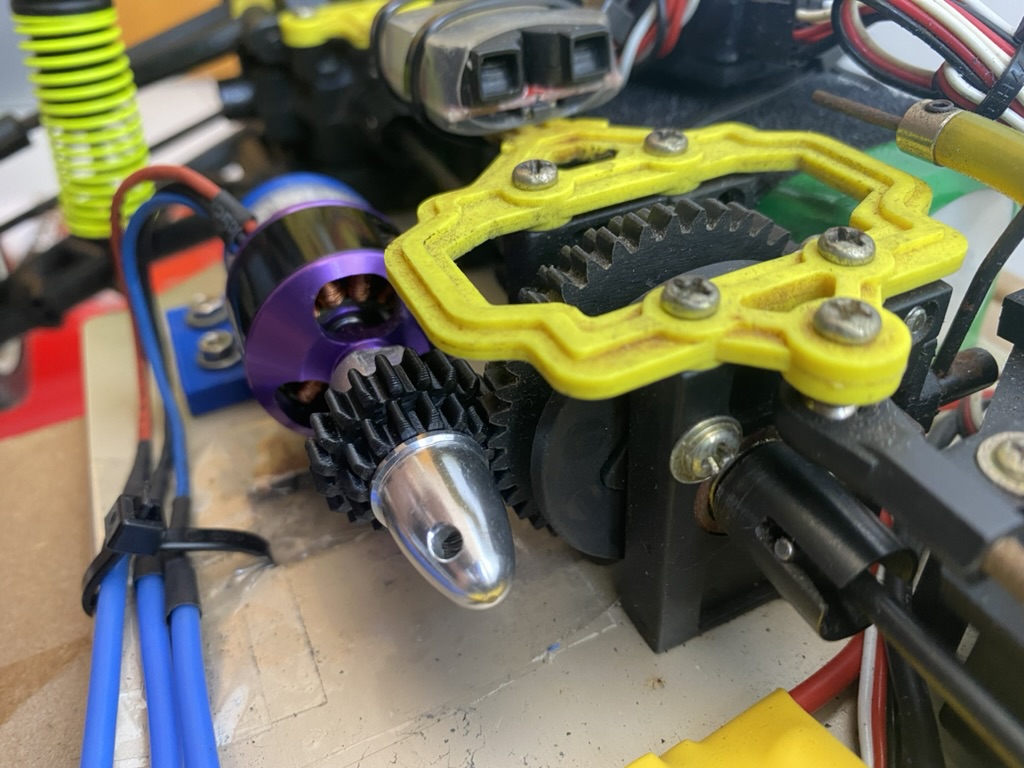
The coupling installed — the black printed gear on the motor shaft meshes with the gearbox. The blue part behind the motor is the printed adapter. The yellow structure is the original chassis.
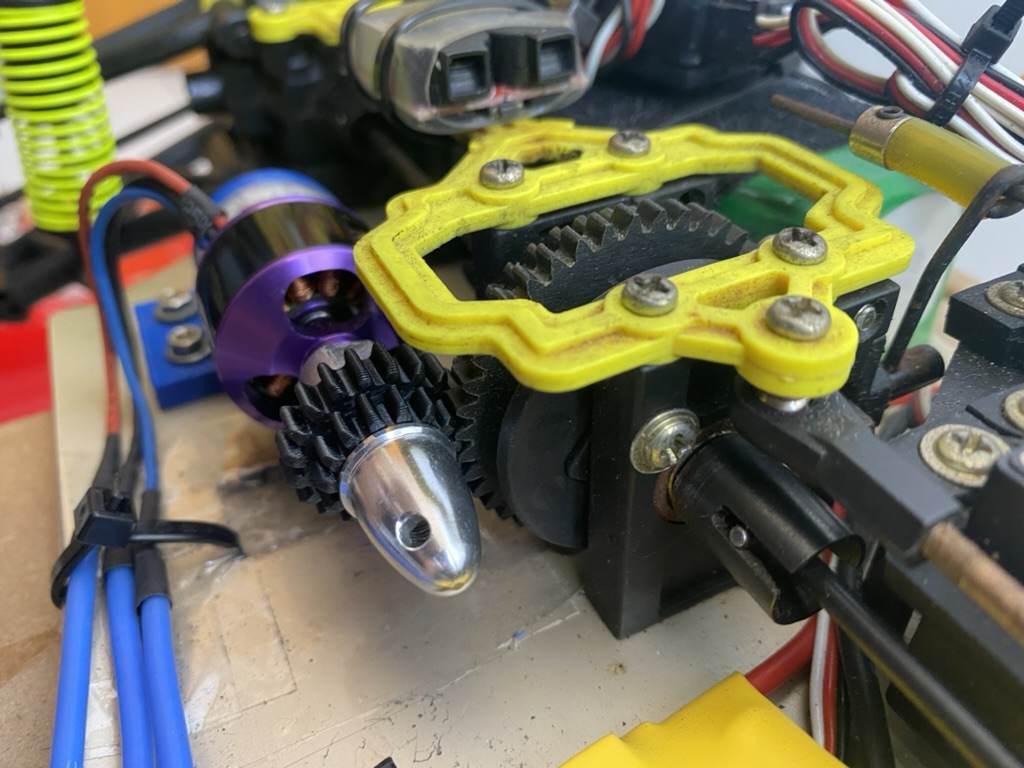
Another angle showing the gear engagement.
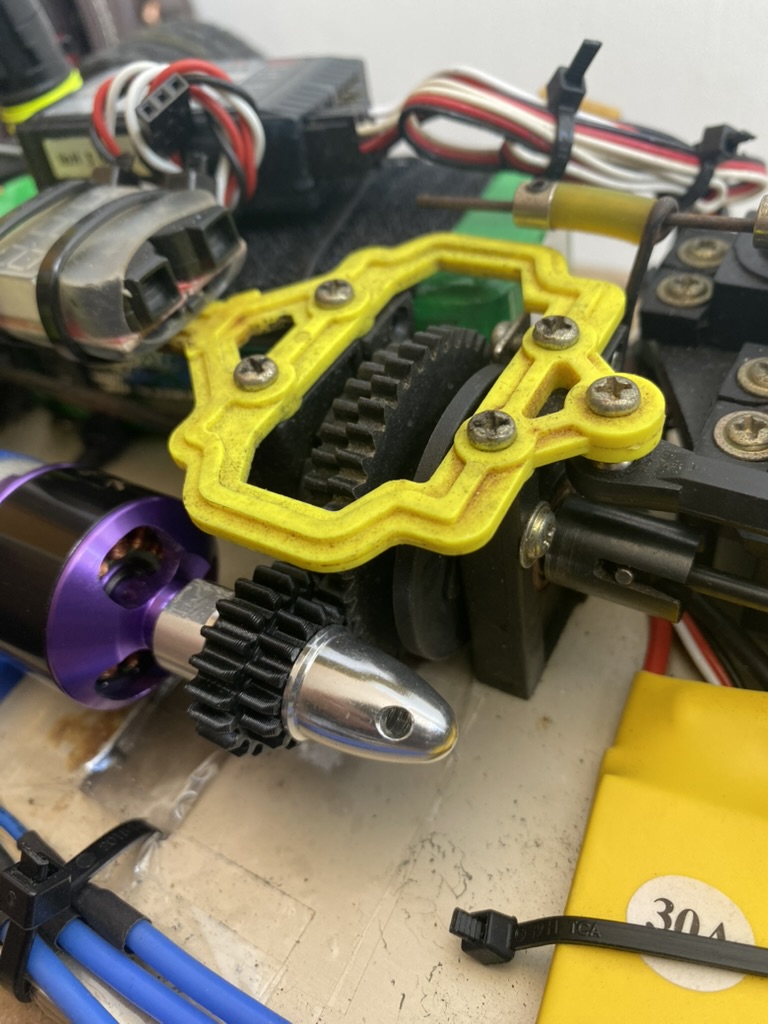
Vertical view — you can also spot the 30A ESC label.
Tires
The original tires had deteriorated beyond use after 20 years. The thin rubber had become brittle and was splitting open. I modeled new tires in Fusion, replicating the tread pattern, and printed them in black TPU (flexible filament) — a front pair and a rear pair with slightly different dimensions.
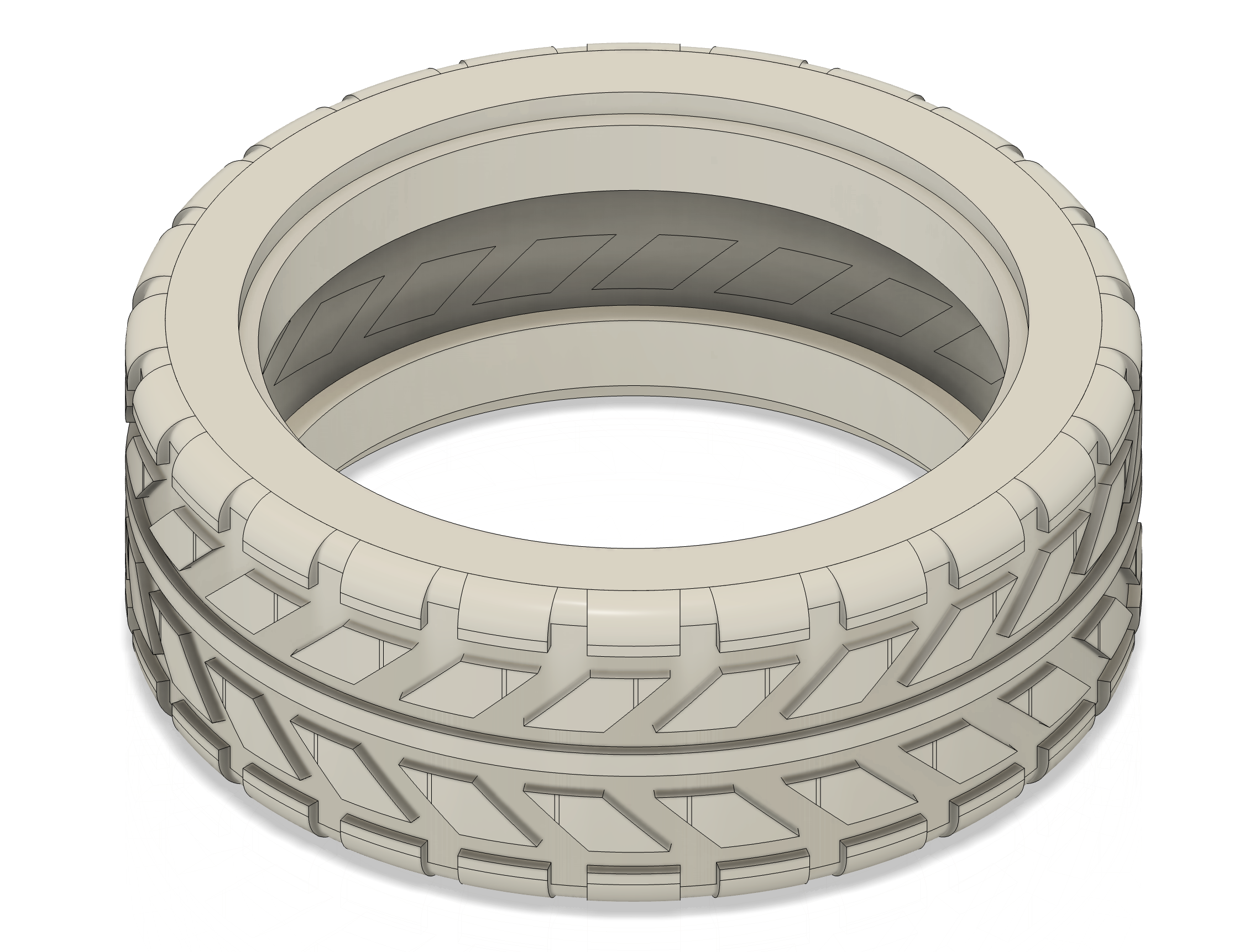
Fusion render of the front tire.
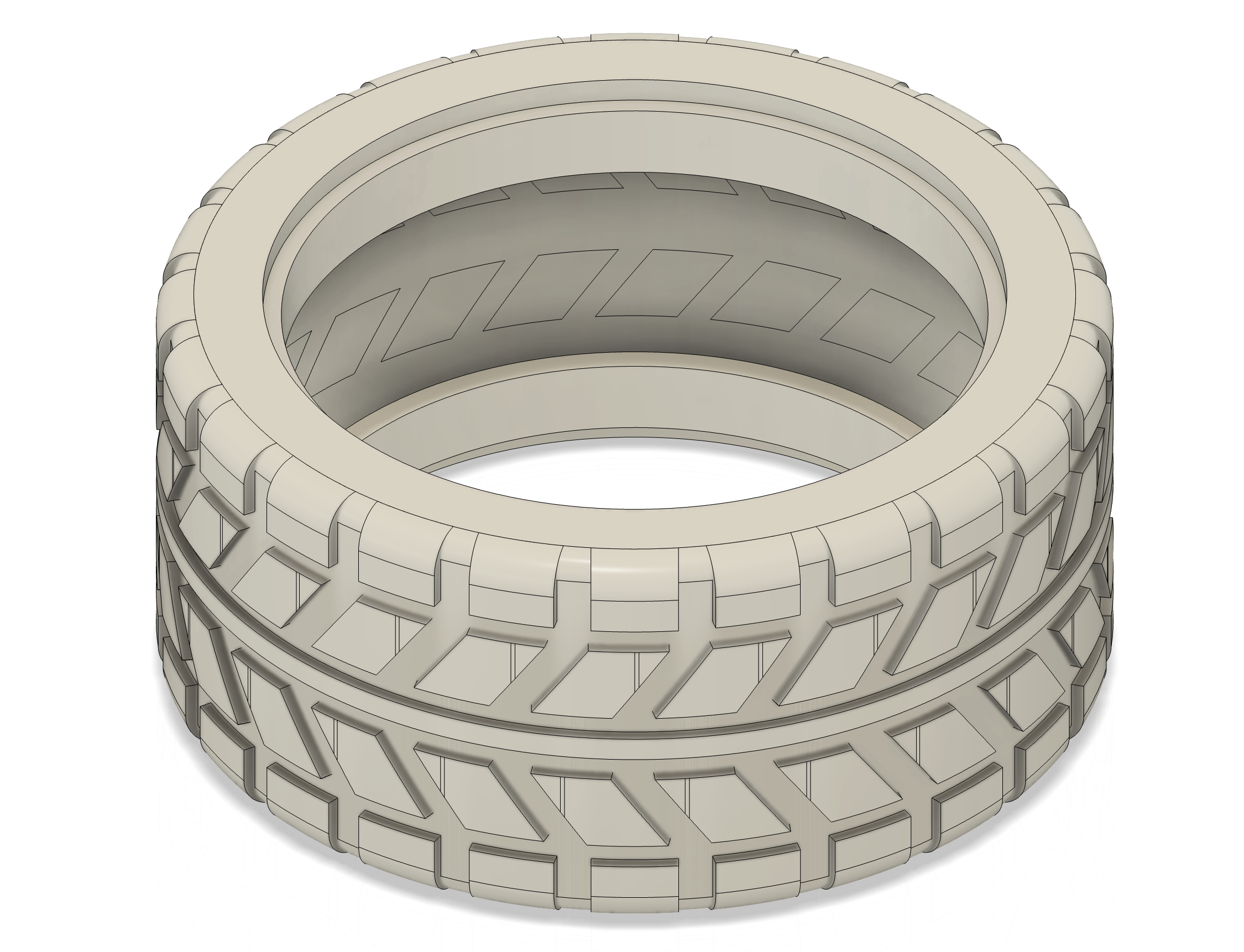
Fusion render of the rear tire (wider).
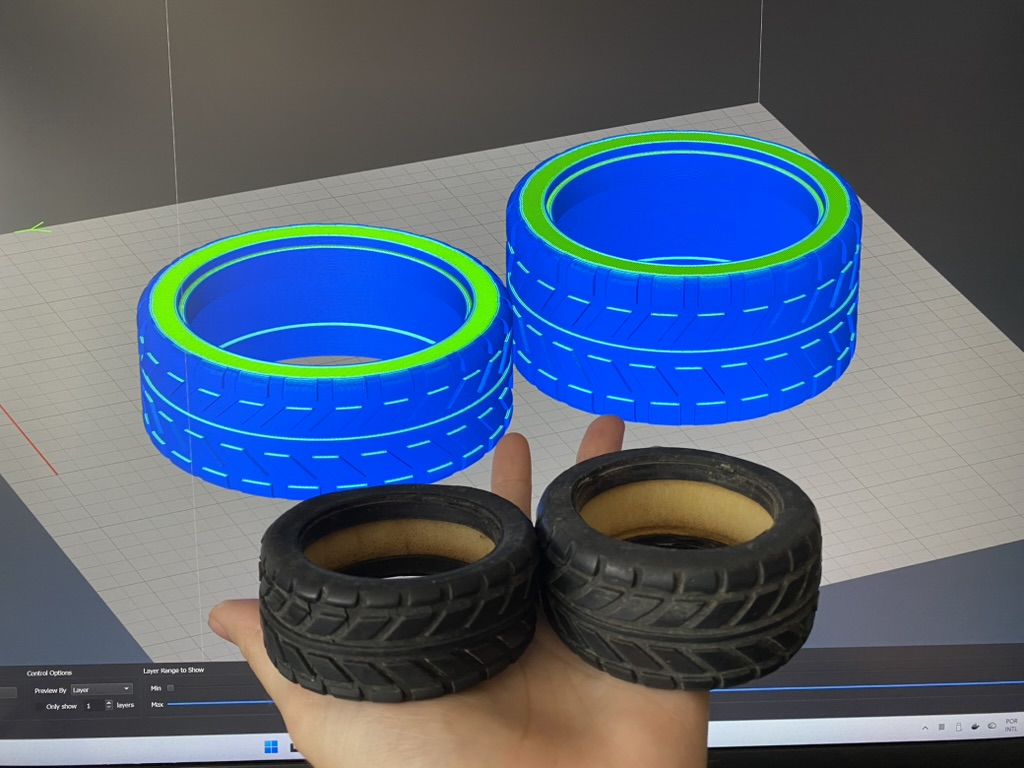
Comparing the 3D model in the slicer with the original tires.
Me showing the printer running, the model and the original old tire.
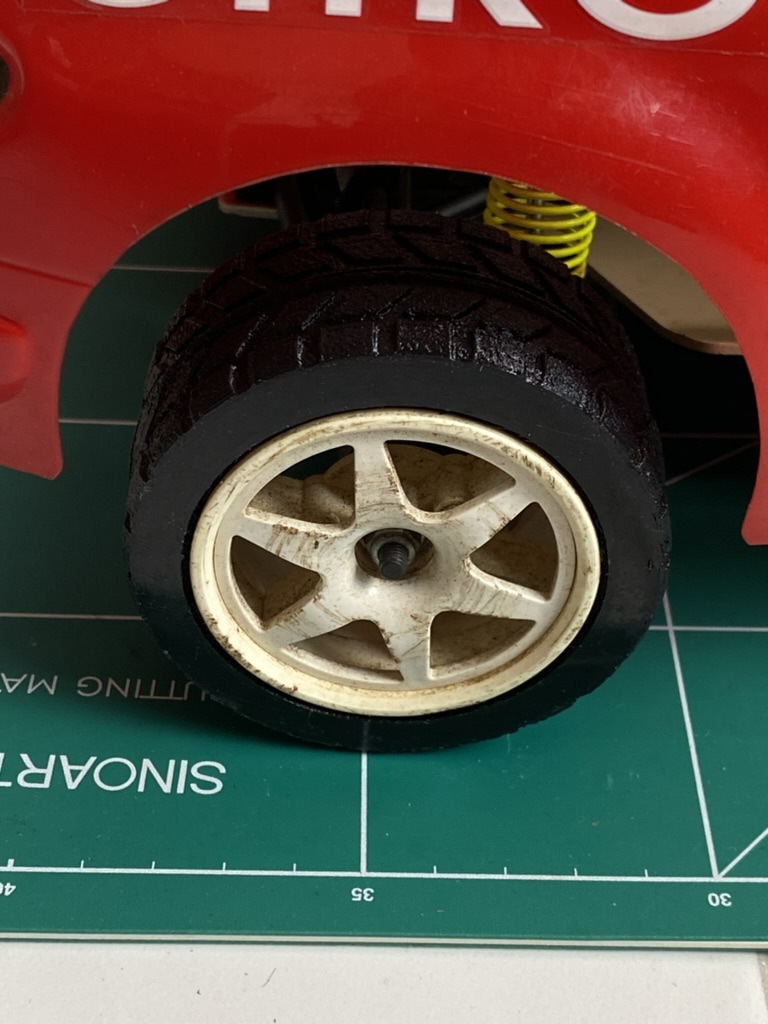
A finished TPU tire mounted on the rim.
The Result
After all the adaptations, the car is alive again. Over 20 years after it was first built — now running silently on electric power, with 3D-printed parts filling in for what time had worn out. The Need for Speed: Most Wanted sticker on the body shell, dating back to 2005, serves as a fun reminder of just how long this car has been around.
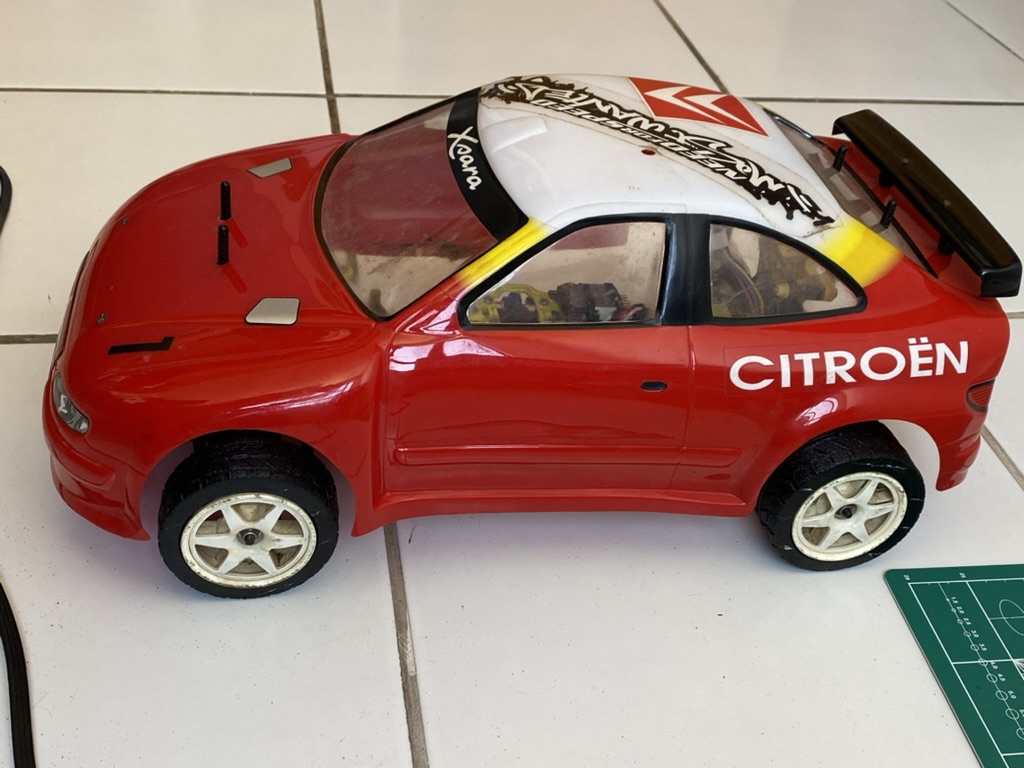
The finished car from above.
The car running after the conversion.
A note on how this was written: the work, decisions, and testing described above are my own. The writing itself was drafted and edited with the help of generative AI (Claude), based on my notes and the real project history.